Artificial Intelligence and the Art of Staying Human
By Diego Berlin · Company 5.19 · The Fifth Point
When almost anyone can create something impressive in seconds, what makes creativity valuable?
The New Reality of Creativity
Artificial intelligence has changed the creative industry. Not gradually, and certainly not quietly.
Today, a single prompt can generate a sophisticated visual, write a campaign headline, produce a website concept, or explore dozens of creative directions in the time it once took to develop one.
The technology is extraordinary. But it also presents an uncomfortable question for creative professionals:
If anyone can create something that looks good, what makes great creative work valuable?
The answer has less to do with what we can produce and more to do with why we produce it.
At Company 5.19, we believe AI isn’t making human creativity irrelevant. It’s making creative judgment more important than ever.
The Difference Between Creating and Thinking
AI is exceptionally good at generating possibilities. It can recognize patterns, combine visual languages, interpret instructions, and produce remarkably polished results.
But polished doesn’t necessarily mean purposeful.
A logo can look beautiful and still fail to communicate a brand’s identity. A website can be visually impressive and completely misunderstand its audience. An advertising campaign can check every aesthetic box without communicating a single memorable idea.
These aren’t failures of execution. They’re failures of direction.
Great creative work begins long before anyone opens a design application or types a prompt. It begins with understanding a business, questioning assumptions, identifying opportunities, and deciding what deserves to be communicated.
AI can accelerate the execution of an idea. It doesn’t eliminate the need for a good one.
Why Creative Direction Matters More Than Ever
For years, technical expertise was a significant barrier to producing professional creative work. Mastering the software, understanding production, and translating ideas into finished designs required years of experience.
AI is rapidly lowering that barrier.
And that’s a good thing.
But when execution becomes more accessible, the value shifts toward something harder to automate: knowing what to create, what to reject, and what will actually make a difference.
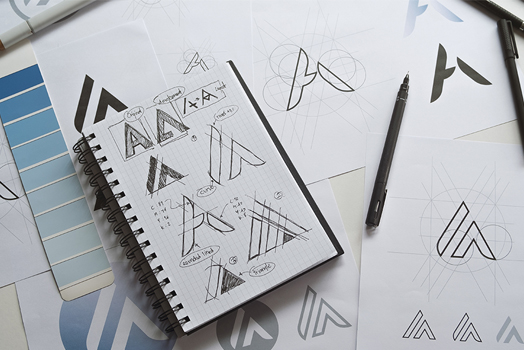
Consider the difference between generating twenty logo concepts and developing an identity that captures a company’s personality, connects with its audience, and remains relevant as the business evolves.
One is an exercise in production. The other is an exercise in strategy, interpretation, and judgment.
The same applies to advertising, branding, digital experiences, and virtually every creative discipline.
The future doesn’t belong to whoever can generate the most options. It belongs to those who can recognize the right one—and explain why.
How We Approach AI at Company 5.19
We don’t believe in resisting technology simply because it changes the way we’ve always worked.
We also don’t believe in using AI simply because it’s available.
We approach it as another instrument in the creative process: useful for exploring visual directions, developing preliminary concepts, testing language, and challenging our initial thinking.
But a tool doesn’t establish a creative strategy. It doesn’t determine what a brand should stand for or take responsibility for the decisions made on its behalf.
That’s our job.
Sometimes AI helps us reach a stronger solution faster. Sometimes the best idea comes from a conversation, an unexpected observation, a sketch, or an entirely different direction.
What matters is the outcome, not how many tools were involved in producing it.
Technology should expand our creative possibilities, not narrow our thinking to whatever is easiest to generate.
Authenticity Is More Than an Aesthetic
The growing sophistication of AI-generated content also introduces questions that creative professionals cannot afford to ignore.
What is original? Who owns the work? How do we distinguish inspiration from imitation? When does a convincing image become misleading?
These aren’t theoretical concerns. They affect the trust between brands, creative partners, and audiences.
We believe responsible AI use requires discernment, transparency where it matters, respect for intellectual property, and a willingness to stand behind the work we deliver.
Not every AI-generated result is accurate, appropriate, or ready for publication. And the fact that something can be created doesn’t automatically mean it should be.
Authenticity isn’t defined by whether a machine participated in the process. It’s defined by the integrity, intention, and accountability behind the final result.
The Real Competitive Advantage
AI will continue to evolve. The capabilities that seem remarkable today may become ordinary tomorrow.
Building a creative philosophy around what technology supposedly cannot do is a losing proposition. Those boundaries will keep moving.
A more valuable question is what creative professionals and businesses should take responsibility for, regardless of how powerful their tools become.
Understanding people. Making difficult decisions. Defining a point of view. Connecting business objectives with meaningful experiences. Recognizing when something is technically impressive but creatively empty.
That’s where experience, perspective, and creative leadership matter.
And it’s where we believe the greatest opportunities lie.
Staying Human Is a Choice
The future of creativity isn’t a competition between people and machines.
It’s about how thoughtfully we choose to use the technology available to us.
AI can help us explore more, experiment faster, and remove unnecessary obstacles between an idea and its execution. Those are meaningful advances worth embracing.
But speed is not strategy. Volume is not originality. And sophistication is not the same as substance.
At Company 5.19, we embrace new tools without losing sight of what makes our work valuable: curiosity, intention, creative judgment, and a commitment to making something that matters.
The goal isn’t to prove that a human touched every pixel. It’s to ensure that a human stands behind every decision.
Because ultimately, the most important part of artificial intelligence may be what it challenges us to become: better thinkers, more deliberate creators, and more responsible designers.
At Company 5.19, we combine creative direction, strategy, design, and emerging technologies to build brands and digital experiences with purpose.